
March
Almanac entry #3: Watching woodcocks, catching moles, and paying attention

We stood around waiting for something to happen.
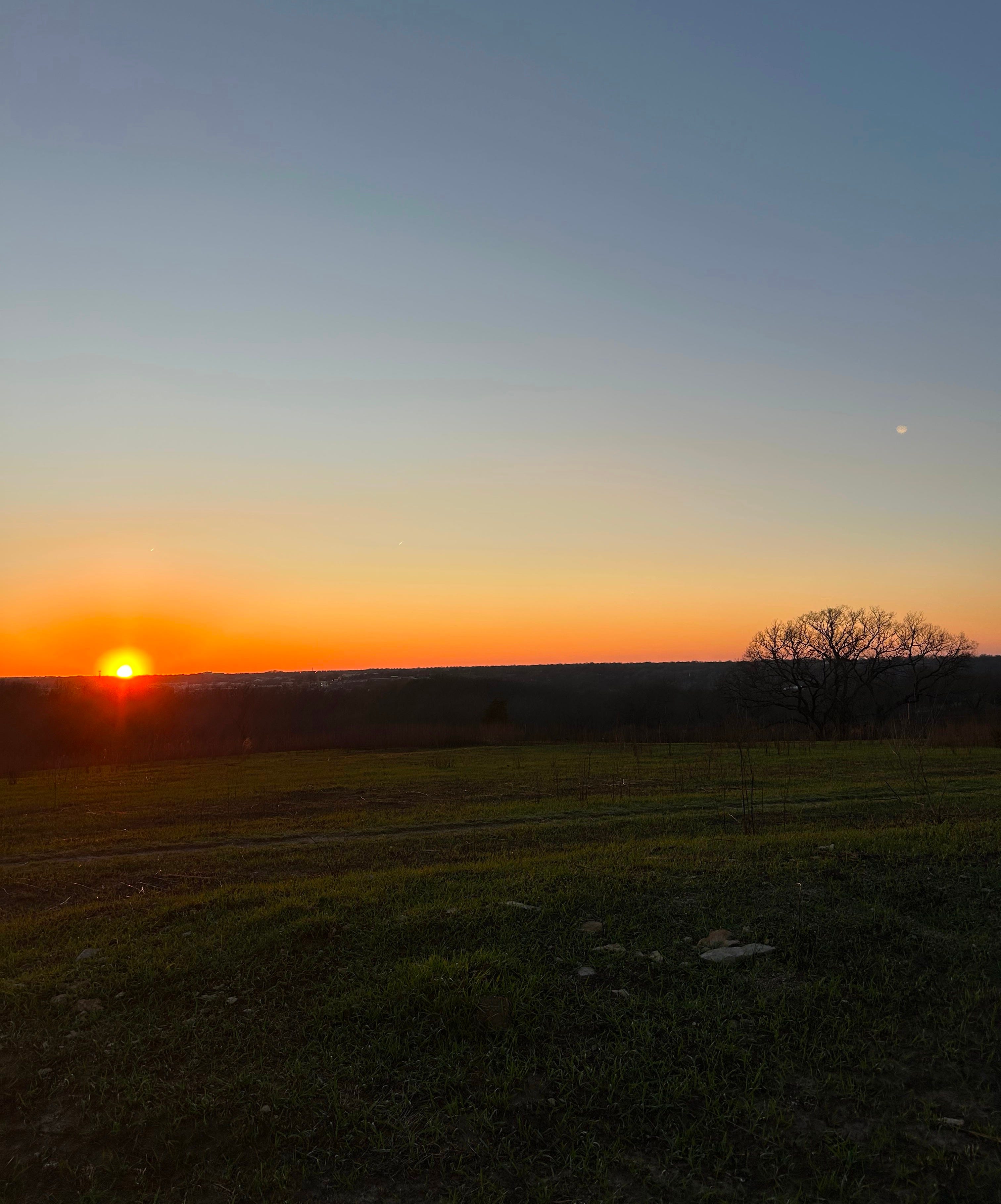
The anticipation stretched in twisting threads among the twenty or so people standing in a half-burned prairie, the sun setting at our backs. The shadows grew longer by the second, and several people checked their watches and phones with equally growing unease. We had to be out of here by eight, or else the park ranger would lock the gate and that would be it for us. Although I wasn’t in a hurry — I figured there were worse fates than being trapped in one of the most beautiful places in the metro area, forced to bear extended witness to the breeding practices of the American Woodcock.
Our group leader, a very cool older lady named Sherry (shout-out), had promised us the show of a lifetime, it seemed. She explained the woodcocks’ breeding dance in detail — starting with low, buzzing peent calls from the underbrush; progressing to a sudden liftoff straight up into the air for hundreds of feet; ending with a dizzying plummet back down to earth. We were all of us buzzing with such anticipation that I wondered we didn’t make our own peent calls.
Finally, at approximately 7:35, Sherry said, “There! Did you hear that?”
We hadn’t. But Sherry was a woodcock guru, so we trusted her, and all fell immediately silent.
The spring peepers were living up to their name in the pond down the hill, and for a while they were the only sound. Then, I heard it: a peent!
I couldn’t help it; I laughed. My heart was beating with excitement and joy, everyone was frantically whipping their heads around looking for the source of the noise, and we were all standing in a field on a Monday night looking for a strange bird with a strange name. It was all so wonderfully, delightfully strange.
Once the first peent had sounded, the gauntlet was thrown. All the other male woodcocks had to make their voices heard, and we were soon surrounded by buzzy bird voices. They had been in the grass all around us the whole time we were standing there, chatting, checking our phones, gazing idly at the sunset. They were not about to be distracted from the task at hand — good old reproduction.
Suddenly, a rush of high-pitched twittering filled the air. A pale football-shaped object rocketed into the air before us, and promptly vanished. I gaped. The twittering continued, moving higher and higher over my head, and yet I couldn’t spot the bird itself for the life of me. This happened again and again, as bird-footballs launched upwards around us, as if thrown by NFL quarterbacks lying on their backs in the grass. Once they moved beyond the backdrop of vegetation, the birds were incredibly hard to see. The sky was casting off the pastels of sunset in favor of shadow, and it seemed to wrap each woodcock up in itself as soon as they surpassed our puny human reach. I wondered how the females could see that far — hundreds of feet in the air. I wondered what we looked like from up there, or if the woodcocks even cared at all. I wondered what it must be like to live on the ground, among the leaf litter, for most of your life, the whole time knowing you have the ability to reach cloud height.
Then, the twittering changed to more of a warbling, chirping sound. Once again, we whipped our heads around, trying to spot the source of the descending whistles all around us. More than once, they sounded so close that I was sure I was about to be dive-bombed, and yet I couldn’t see a thing. It wasn’t until the last seconds of their descent, when they swooped back into the cover of the long grass, that we could see and recognize the birds.
This whole routine lasted about half an hour, and then it was time to leave (I supposed it would be hard to explain to work the next day that I was late because I got locked in a field with some copulating birds). The group maintained a hushed sort of reverence as we walked back to our cars, each one of us unable to contain the smiles on our faces. We had arrived on that Monday night tired from work, school, caring for our families, or any one of a myriad of human experiences, and we left refreshed by witnessing the lives of something else.
I drove home in silence, foregoing music for the sound of the wind.
As I write this, I’m sitting at the kitchen table with the window open, listening to the neighbor kids play outside. I was just out there with them, planting peas and greens in my raised beds and chatting over the fence between our backyards. As we talked, I noticed a mole crawling under the fence, so I excitedly pointed it out: “Look, there’s a mole!” One of the kids, a little girl wearing pink unicorn pajamas, immediately reached down to grab it. Startled, I exclaimed, “Wait — stop!”
She recoiled, turning wide eyes to me. “What’s a mole?” she asked.
I laughed and told her, explaining that they couldn’t see very well and that we should leave this one alone and not scare him. But I envy her the instinct to see something new and unfamiliar and to reach out and touch it without hesitation. I think I caught a glimpse of that base, human urge when I was watching the woodcocks. I witnessed something so apart from my own humanity that I wanted to embody it in order to understand it — to harness the air currents with the male woodcocks, to watch from among the prairie grass with the females. I wanted to reach out and feel their Otherness with both hands.
Of course, I can’t do that. And if the little girl had succeeded in grabbing the mole, she would feel its silky soft fur, but she would be left with a traumatized mole, dirty hands, a scandalized mother, and not much more understanding of what a mole is. Grasping alone is not enough. True understanding is a give and take.
We take sensation, knowledge, memories. And what do we give? Simply this: our attention.
It’s right there in the phrase: “paying attention”. “Pay” doesn’t seem like quite the right word, though. Too impersonal, too purely transactional. “Giving attention” is more right to me. It is an act of the will, freely given.
There is a Mary Oliver quote that I have been thinking about, from her essay Upstream: “Attention is the beginning of devotion.” And there is something my parish priest said recently that I thought was very true (I’m paraphrasing here): “The more you know about someone, the more you can love them. It’s like the target you’re shooting at gets that much bigger.” This is true about people, nature, God, art, science, math, literature…anything, really. I give attention to my friends by listening to them, asking questions about their lives, spending time with them. I give attention to nature by learning the names of the birds and insects and plants, and by simply going out and looking and listening and smelling and feeling. I give attention by learning about and looking upon the other. And slowly that grows to love, and is love, which is a deeper kind of communion, the closest we can get to embodying something other than ourselves.
Spring is a good time for all this. I spread my attention over the earth with the sunlight and rain, and I watch love come up from the soil with the tender new plants. I might even spot some tiny, fluffy woodcock chicks or a naked newborn mole, and think, I know you. It doesn’t happen all at once, but it will happen, as surely as the earth turns.
I’ve never been so lucky to hear the peent!! Thanks for sharing
Awesome post. Love the interaction with the neighbor. May she stay curious!